




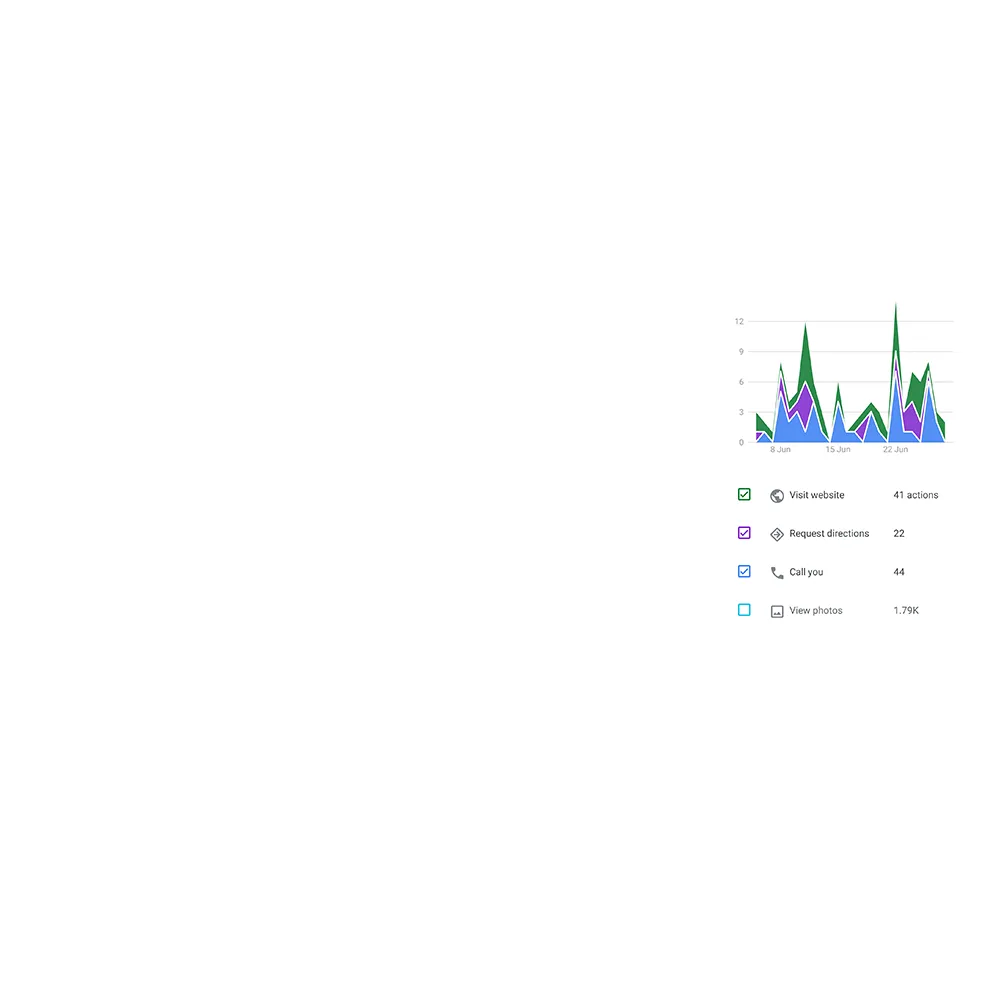

Organic (natural) search visibility remains one of the most valuable assets for any business website. Users instinctively trust organic search results more than paid ads.
Appearing naturally in Google’s rankings demonstrates that your website is relevant, authoritative, and trustworthy. This credibility directly influences how potential customers perceive your business.
Organic search engine rankings can deliver traffic day after day, month after month with ongoing optimisation providing sustainable, long-term visibility. It’s a cost-effective source of visibility that compounds over time.
Studies show that users click on organic results far more often than paid ads. Many people scroll past sponsored listings to reach what they consider the “real” results meaning a high organic ranking puts you exactly where users prefer to engage.
When your website appears naturally in search results, it’s because Google’s algorithm recognises it as a strong match for a user’s query. That means the visitors you attract are actively looking for what you offer making them far more likely to convert into leads or customers.

Keyword research to find popular search terms and how competitive
Analysis of competition and the search terms they are listed for
On-page optimisation and website code that Google analyses

What positions are being achieved and further improvement
Getting listed in Google’s natural search results means your business is visible, trusted, and discoverable to the right people at the exact moment they’re looking for what you provide- without paying for each click.
AI Search forms a huge part of the Search Results landscape. AI results are at the forefront for many search results and users often head straight to LLMs like Chat GPT to search for answers to their questions.
This is particularly useful for search terms where users are looking for answers to questions and not just names or types of businesses.
It is a huge boost if your business can show up in these answers in order to help your business get discovered. You also immediately begin to generate a level of credibility and authority. So putting the blocks in place to help you get discovered this way are important.
AI-powered tools like Google Gemini and ChatGPT are entry points to finding information. When your business is mentioned in AI-generated answers, you gain visibility in front of users capturing attention in their decision journey.
AI systems highlight credible, well-structured, and authoritative sources. Being referenced signals that your content is accurate and reliable which enhances your business reputation.
AI search offers a layer of organic discovery. If your website is well optimised, AI systems may pull from your content when generating summaries giving you free exposure in a premium, trusted space.
If your competitors are mentioned in AI search answers and your businesses isn’t, you’re losing out. Appearing in AI results helps your business remain visible, relevant, and competitive in this next era of search.
Here are some key strategies and what to focus on, based on current practices.

Schema markup is a format for your pages that AI bots can easily read and understand. Web pages with content such as FAQ’s or 'How To', help AI systems understand and use your content.
Pages that answer specific questions clearly and directly are very successful is being referenced in AI answers.

Make sure your website maintains core SEO practices such as mobile-friendliness, fast load times, well-structured information and easily indexable.
Ensure important pages on your website can easily be crawled properly and are visible to search bots.

There is no guarantee that optimising alone will get you recognised by AI systems and the criteria is still evolving. What works today may change as AI models and indexing change.
Appearing in an AI-overview may not send large volumes of click traffic, so it is not a standalone solution, but it is worth including in your overall digital marketing strategy.
Write pages that answer specific user questions clearly (FAQ style, How-To) rather than vague general content. Use headings, bullet lists and short paragraphs to make it easier for AI models to understand and quote your content.
Demonstrate trustworthiness with evidence of expertise, accurate data, citations to credible sources.